New Website Launch June 2022
We are working hard to bring you a new website with increased functionality and a brand new look! Check back soon to see our updates!
Overview
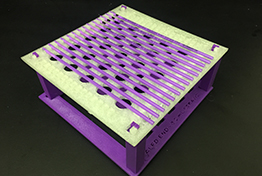
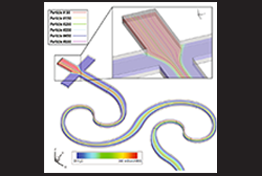
Historically, innovation has not been translatable to the problems and needs for creation of custom devices to support repository development in aquatic species. This lack of devices and equipment specifically designed for use with fish and shellfish has forced researchers and other user groups to modify and adapt devices that were developed for livestock and humans. This decades-long impediment has been removed by recent technological advances that provide powerful new fabrication methods, such as soft lithography (microfabrication) and additive manufacturing (3-dimensional printing). We utilize these as core capabilities to rapidly translate innovation, in the form of custom design ideas, into reality through our technology development process.
Our technology development pathway at the AGGRC is designed to move from ideas to products by incorporating: 1) three levels of prototyping with a wide variety of operational evaluation (alpha testing); 2) performance evaluation by user groups and user communities (beta testing), and 3) production of provisional products that can be made commercially available. Our approach is based on strong interdisciplinary collaboration, capitalizing on long-standing relationships among cooperators spanning multiple disciplines across biology and engineering.

Figure 1. Production stages in progression from ideas to products at the AGGRC. To advance from begginning to end of this pathway requires the expertise of more than a dozen disciplines encompassing research and technology development.
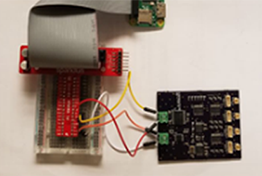
This process is extremely flexible and can accommodate a wide range of devices and applications that can be integrated with sensing and monitoring electronics, printed circuitry, microprocessors and microcontrollers, databasing, and wireless connectivity to further enhance capabilities. All of this can be custom designed for use with aquatic species, and at the same time be used with traditional species and to address existing markets including mammals. In fact, given these powerful capabilities for design and fabrication, these devices may be more functional, inexpensive, and cross-platform compatible than their current commercially available counterparts.