New Website Launch June 2022
We are working hard to bring you a new website with increased functionality and a brand new look! Check back soon to see our updates!
Historical Roots of the AGGRC
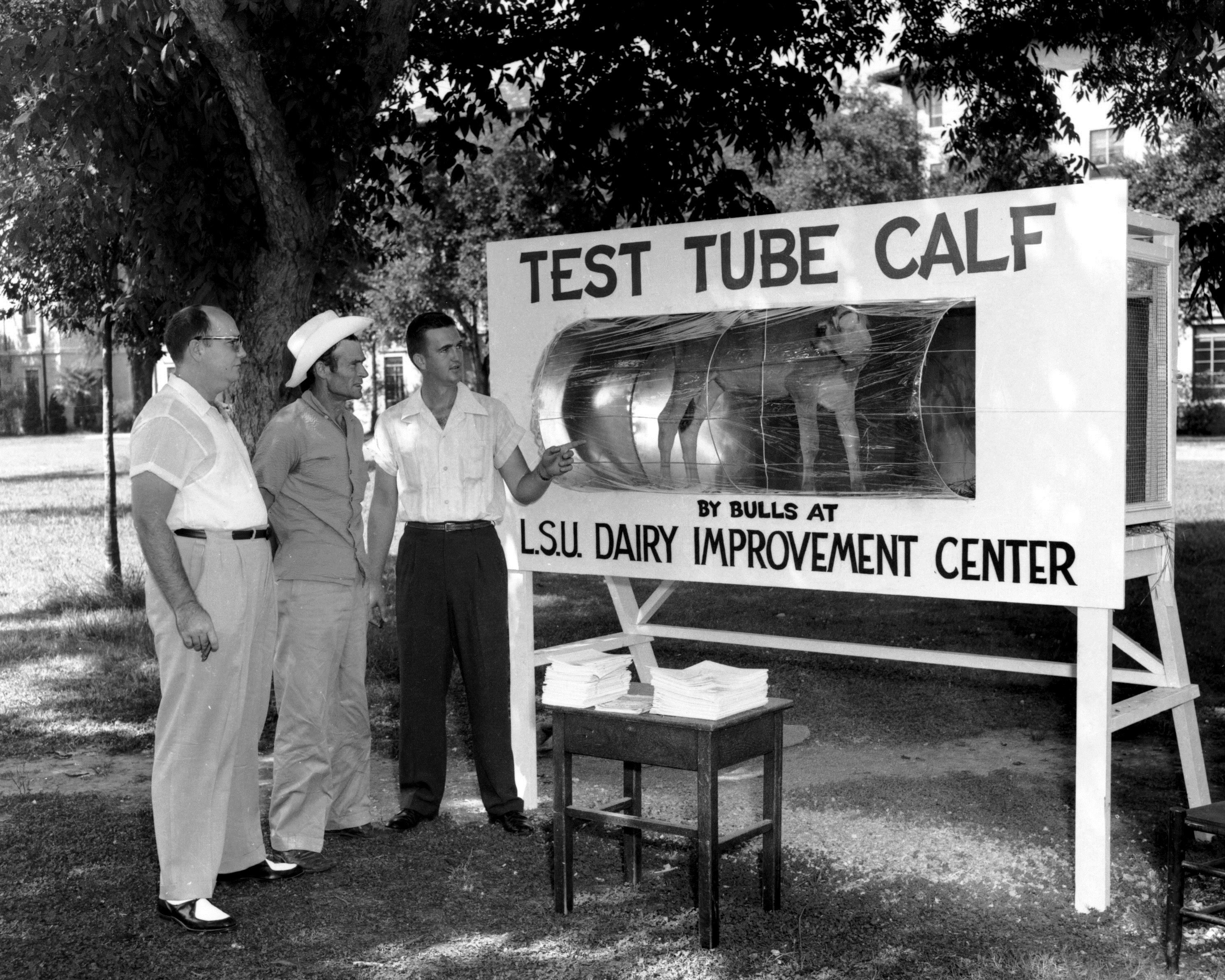 In 2014, we began with a mission to create an Aquatic Germplasm and Genetic Resources Center (AGGRC).This new Center
would represent the confluence of work done in the
LSUAC Aquaculture Research Station and the LSU Dairy
Improvement Center which was part of the Dairy Sciences Program.
The AGGRC was initiated to provide global leadership in repository
development and commercialization of genetic resources of aquatic species. The facility has 23,000 ft2
of
space
dedicated to research, teaching, outreach, administrative, and commercial-scale service activities for
aquatic
species. The AGGRC is being developed as a multidisciplinary innovation and technology development
center in
which
ideas can be rapidly moved from prototypes through alpha and beta testing to sample products ready for
commercialization.
The AGGRC has currently established a strong Core Innovation Team (CIT) with faculty from 8 LSU
departments.
The CIT
faculty have more than 20 projects among them, involving 25 undergraduate, MS, and PhD students.
In 2014, we began with a mission to create an Aquatic Germplasm and Genetic Resources Center (AGGRC).This new Center
would represent the confluence of work done in the
LSUAC Aquaculture Research Station and the LSU Dairy
Improvement Center which was part of the Dairy Sciences Program.
The AGGRC was initiated to provide global leadership in repository
development and commercialization of genetic resources of aquatic species. The facility has 23,000 ft2
of
space
dedicated to research, teaching, outreach, administrative, and commercial-scale service activities for
aquatic
species. The AGGRC is being developed as a multidisciplinary innovation and technology development
center in
which
ideas can be rapidly moved from prototypes through alpha and beta testing to sample products ready for
commercialization.
The AGGRC has currently established a strong Core Innovation Team (CIT) with faculty from 8 LSU
departments.
The CIT
faculty have more than 20 projects among them, involving 25 undergraduate, MS, and PhD students.
AGGRC Mission
The mission of the AGGRC is to provide global leadership for development of germplasm repositories and commercialization of genetic resources for aquatic species through interdisciplinary collaboration. Rather than positioning the AGGRC as a central global repository, our approach is instead to develop technologies and practices and provide services necessary to empower the multiple and diverse communities within aquatic species to establish their own germplasm repositories. Currently most work directly addresses the pervasive lack of standardization and reproducibility that characterizes cryopreservation within aquatic species. These problems have slowed research through inefficiency and failure. Overall, although cryopreservation is possible at a research scale, it is not being utilized to near full potential for development of repositories or repository networks. The Center is directed by Dr. Terrence Tiersch who has 25+ years of experience working with numerous colleagues across hundreds of aquatic species and user communities addressing aquaculture, wild fisheries, conservation, and biomedical models. Based on this experience concerning the problems and opportunities for aquatic species, the AGGRC is organized across four core program areas that span user needs from research through industrial-scale application.

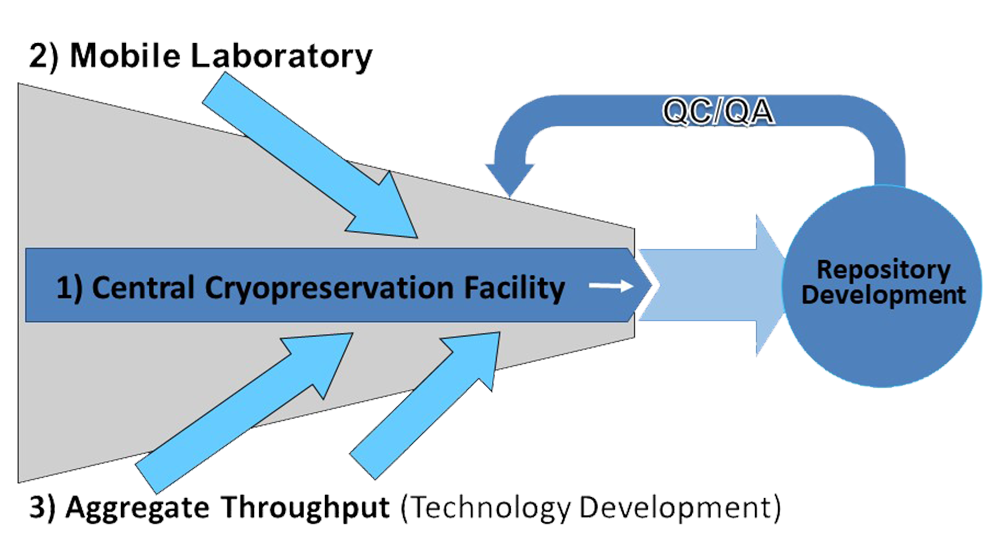
Pathways to Repository Development
AGGRC Facility
The AGGRC occupies ~3 acres next to the Mississippi River and adjacent to the LSU main campus in Baton Rouge. This location facilitates travel and interdisciplinary collaboration for faculty and students. It encompasses 23,000 ft2 on the main foundation and has three additional outbuildings for storage and other uses. It is the site of the former LSU Dairy Improvement Center. AGGRC development has involved continuous alteration and renovation since 2015 to repurpose the facility from livestock to aquatic species
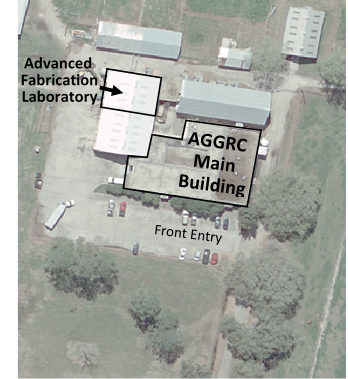
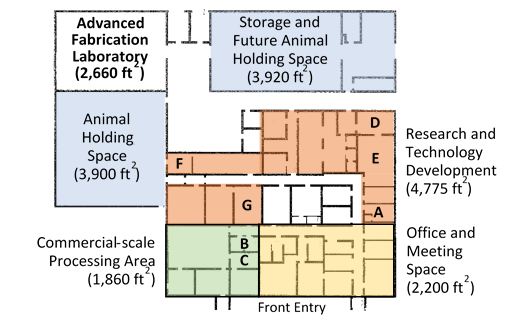
The AGGRC Main Building occupies more than 11,000 ft2 and has 16 3-D printers in 5 rooms including a design maker space (A), a custom fabrication room (B) and a rapid prototyping area (C). For animal holding there is a biomedical (NIH) fish room (D), a general wet laboratory (E) and a quarantine room (F). A fully equipped electrical engineering laboratory (G) receives intensive daily use. The former barns located on the building foundation (blue shading) have been converted to storage space and animal holding areas. Currently a barn is being repurposed for creation of the Advanced Fabrication Laboratory which will share a roof with the former Bull Semen Collection Arena.
Core Programs
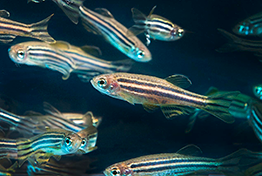
The AGGRC comprises four central interlocking core programs intended to develop and deliver broad-based generalizable approaches that can support repository development across the broad range of aquatic species user communities. For example, approaches developed for a biomedical model such as zebrafish can be readily applied with cultured species such as catfish or oysters. This process can be viewed as a chain of activities: beginning with 1) research (e.g., to specifically identify problems), that informs 2) technology development (e.g., simple, reliable, and inexpensive freezing devices), which leads to 3) community level interactions (e.g., to test and refine devices and procedures), that can ultimately be applied at 4) commercial scale (e.g., to reliably process and commercialize millions of samples). The connectivity of these core programs continuously shifts to reinforce one another, and to allow rapid adjustments to changing situations. This kind of structure can be viewed as being analogous to a start-up company that has the capability to identify market needs and make rapid pivots to improve products and services. With these four programs, the AGGRC has assembled a unique combination of facilities, equipment, experience, and expertise well-suited to global leadership in development of repositories for aquatic species.
Research
Our 25 years of experience with hundreds of aquatic species allows us to address real-world problems and opportunities...
Read more
Technology
Our multi-disciplinary team environment combines cutting edge technologies across engineering and biology ...
Read more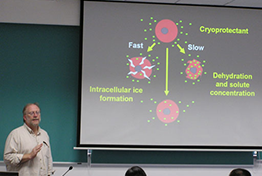
Communities
We are committed to serving as a global resource for developing communities and markets in aquatic genetic resources ...
Read more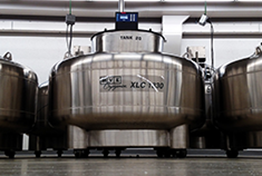
Commercial
We have pioneered high-throughput processing with industrial engineering principles including quality management ...
Read more